Step 1 Build the map
Add notes and sources.Label how they connect.
Connections preserve your meaning. They show what supports a claim, reveals context, or raises a question.
 Story Prism
Bring your notes, sources, and drafts into one map. Story Prism follows the relationships you create to provide the context that matters.
Start BuildingFree to start. No credit card required.
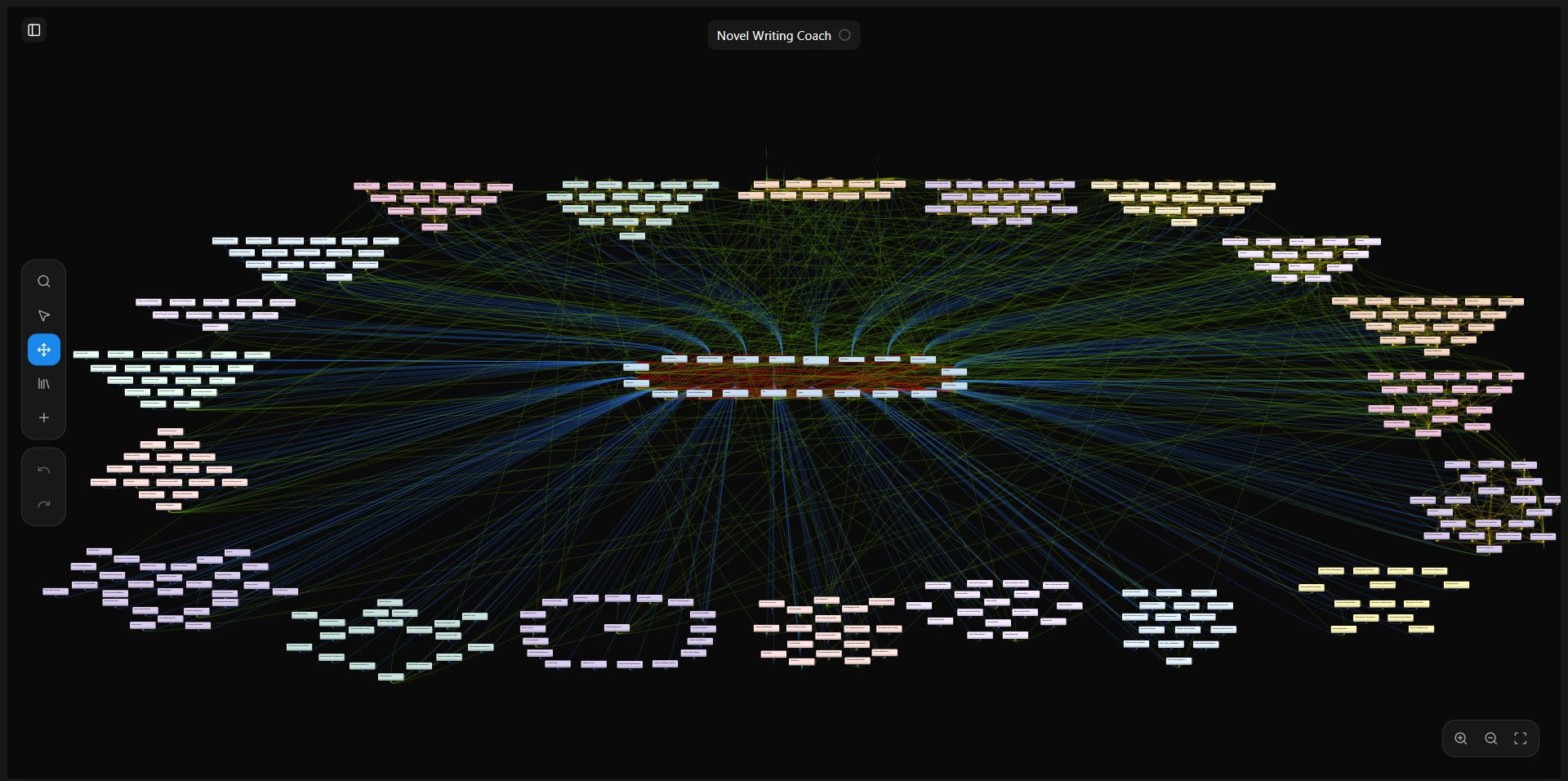
The problem
Key details disappear.Your AI forgets what you said three chats ago.
Your work is split apart.Notes, sources, and chats all live separately.
By chapter 10, a name is gone.Every time you return, you start from zero.
Bigger context windowsdon't fix this.
Because recall isn't reasoning.A pile of documents can't tell your AI what connects to what, or why it matters.
Add notes, label how they connect, then ask questions. Story Prism follows your map to answer from your material.
Step 1 Build the map
Connections preserve your meaning. They show what supports a claim, reveals context, or raises a question.
Step 2 Ask across the map
It searches your project, traces the relationships you mapped, and shows the evidence behind the response.
Step 3 Grow what you know
Connect it to more evidence and questions so the map becomes richer context for the next answer.
Connect the dots
Other AI tools search for matching words. Story Prism reads and follows the relationships you create, finding sources across your map and pointing every answer back to where it came from.
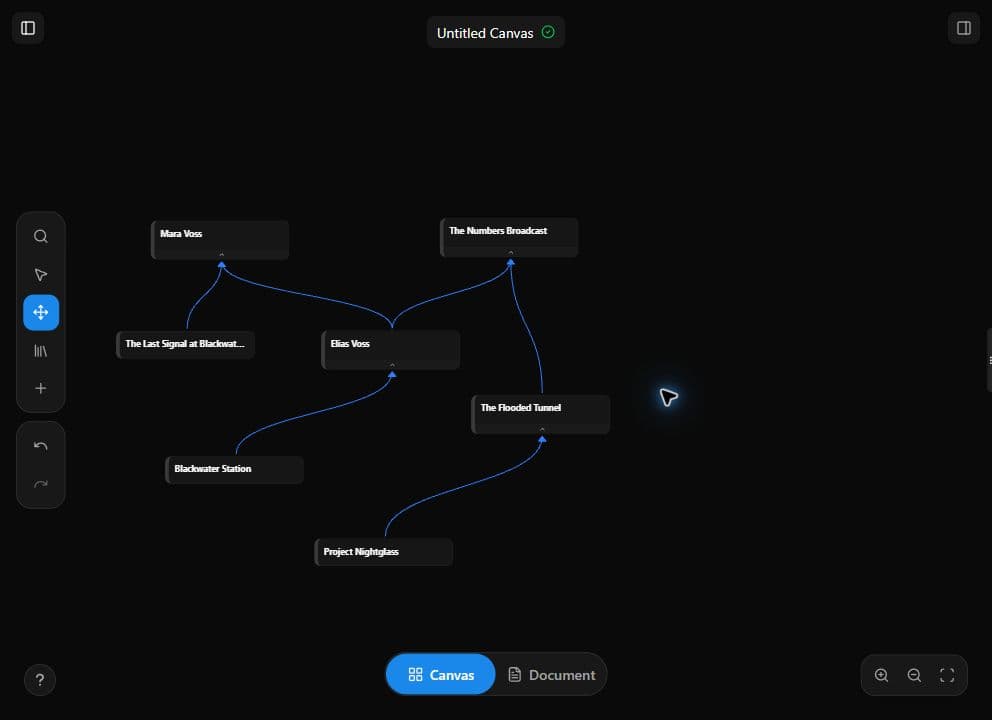
The more you build your canvas, the more your AI can do.
One place to connect your ideas, sources, and evidence—then see how they fit together.
Screenwriters & Novelists
Start with what you already have, including notes, sources, drafts, and evidence. Connect what matters. Then ask.
Free to start. No credit card required.